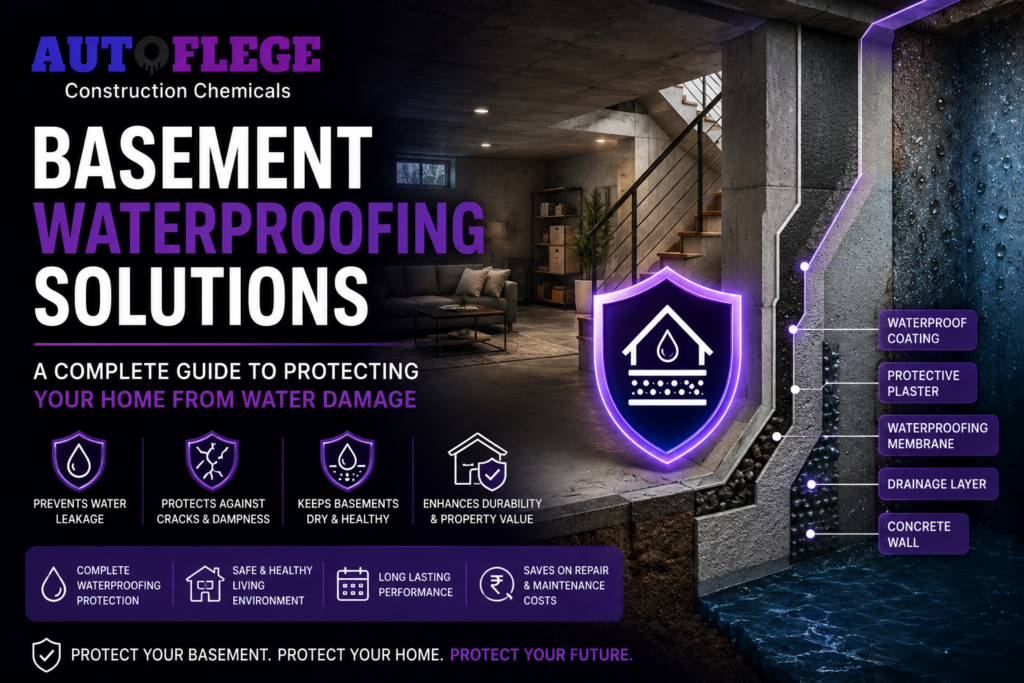
Basement Waterproofing Solutions – A Complete Guide to Protecting Your Home from Water Damage
The structure of your building is only as strong as its foundation, and one of the most ignored areas by both homeowners and builders is the basement. Your basement is below ground level and is constantly exposed to moisture created by the soil, groundwater, humidity and rainwater draining into the basement. Even a small crack in your basement wall may allow small amounts of water to enter the building gradually, which can lead to dampness, foul odours, mould growth and eventually structural damage over time.
Many people don’t think basement leaks are serious in the initial stages; there is a slow buildup of evidence that creates doubt as to whether the leak is serious. This could be as simple as small amounts of moisture on the walls, peeling paint or wet floors, which does not seem like a large problem. Over time, however – after months and years of water entering the basement – the concrete can be damaged, the steel reinforcement bars can deteriorate and building durability can be compromised.
This is why it is imperative to provide a waterproofed basement to reduce the risk of long-term damage from water ingress to all types of buildings – residential homes, commercial properties, warehouses, parking structures and industrial buildings. If your basement is properly waterproofed, the risk of long-term damage to the building will be reduced and the safety and durability of the occupants will be improved.
New basement waterproofing products and systems provide more reliable and long-lasting solutions to waterproofing basements than ever before. Waterproofing chemicals of a high quality are being used along with sophisticated waterproofing coating systems that will provide a high degree of waterproofing protection.
The Significance of Waterproofing Your Basement
Water and soil are constantly present in contact with your home’s basement. Due to this constant interaction, water can enter your home’s basement through various routes if proper waterproofing measures are not taken.
Water Seepage Prevention: By preventing water from leaking into the basement, you will also prevent damage to your floor coverings, walls, stored items, electrical systems and interior finishes in your home.
Structural Protection: Ongoing exposure to moisture will deteriorate concrete and steel reinforcement for the life of the structure due to the lack of proper waterproofing.
Mold Prevention and Avoidance of Damp Condition: Mold can grow in wet basements due to the ideal moist conditions in a basement and poor air quality.
Extending the Lifespan of Your Property: Adding a waterproofing system to your basement will increase the durability of your entire property.
Increasing Your Costly Repair Costs: By waterproofing your basement as soon as possible you will reduce your chances of experiencing future costly repairs resulting from wet damage and mold.
Also Check: WATER-BASED WATERPROOFING PRODUCTS (THE SMELL PROBLEM) — THE SCIENCE OF DRYFIKS™ URP LATEX
Reasons for Basement Leakage:
Understanding the various sources of leakage in your basement is essential to finding the right solution for waterproofing your basement.
1. Cracked Concrete
Concrete will naturally crack, regardless of the quality of the concrete, based on temperature fluctuations, shrinkage of the concrete, and movement of the foundation.
2. Poor Drainage Around Your Building
If the drainage around the base of your building is not directing water away from the base of the building, there will be an accumulation of water around your home’s foundation and eventually into your basement.
3. Hydrostatic Pressure
Hydrostatic pressure occurs when there is groundwater collecting above your basement which exerts force through cracks and pores in your basement floor and walls.
4. Poor Installation Quality / Construction Quality
Poor construction materials and improper waterproofing used during the construction of a building are two of the most common causes for basement leaks.
5. Plumbing Leakage
Plumbing that runs through the walls of your building can cause moisture to enter your basement; pipe leaks are a common cause of moisture entering the basement.
Basement Waterproofing Indicators
Homeowners should never ignore the following signs; if any of these symptoms are present it is recommended that you take action immediately.
Basement Waterproofing Techniques
There are different methods of waterproofing depending on the extent of water leakage and conditions of the building.
Cementitious Waterproofing is by far the most used method
Some benefits of cementitious waterproofing are:
- Strong Bond to Concrete
- Easy to Apply
- Cost-Effective Against the Elements
- Will Work on Most Interior Surfaces
Autoflege produces high-quality cementitious waterproofing systems to reliably waterproof basement walls and floors.
Liquid Waterproofing Membranes
are applied as a liquid to create a continuous and seamless protective membrane over the substrate.
Some benefits of Liquid Waterproofing Membranes are:
- Flexibility
- Crack-Resistance
- Excellent Adhesion
Long-Term Protection
Liquid waterproofing membranes work well on underground structures subject to moisture.
Polyurethane Waterproofing: is flexible and therefore can be applied in areas where there is extreme water intrusion.
Some benefits of Polyurethane Waterproofing include:
- High Elongation
- Water-Pressure Resistance
- Durable
Excellent Crack Bridging Properties
Crystalline Waterproofing: is a method of waterproofing that uses chemicals that react to moisture and concrete to close water passageways.
There’s a handful of advantages to using Crystal Waterproofing as follows:
– Penetration of Base
– Self-Sealing Properties
– Long-lasting durable
– Protection to the Concrete on the Interior
Waterproofing Your Basement Steps
Also Check:-Roof Waterproofing Guide
Knowing the proper application will help keep your basement waterproofed for many years.
Cleaning Surfaces
Dust, grease, loose material, paint and any other contaminants must be cleaned from the surface material.
Crack Repair
By the help of suitable repair mixture cracks must be repaired.
Smooth surface preparation
All surfaces must be smooth and on same level before applying the waterproofing coating.
Basement water leak is more than simply cosmetic. Regularly infiltrating moisture will weaken the structure, cause damage to the interior, foster mold growth, and increase ongoing maintenance expenses.
Proper basement waterproofing protects the property from long-term damage, enhances the structural integrity of the building, and provides for a healthier indoor environment. The selection of an effective method of waterproofing and the use of high-quality materials with appropriate application procedures will provide the best level of protection.
When the foundation of the entire structure is strong, the whole building remains stable.