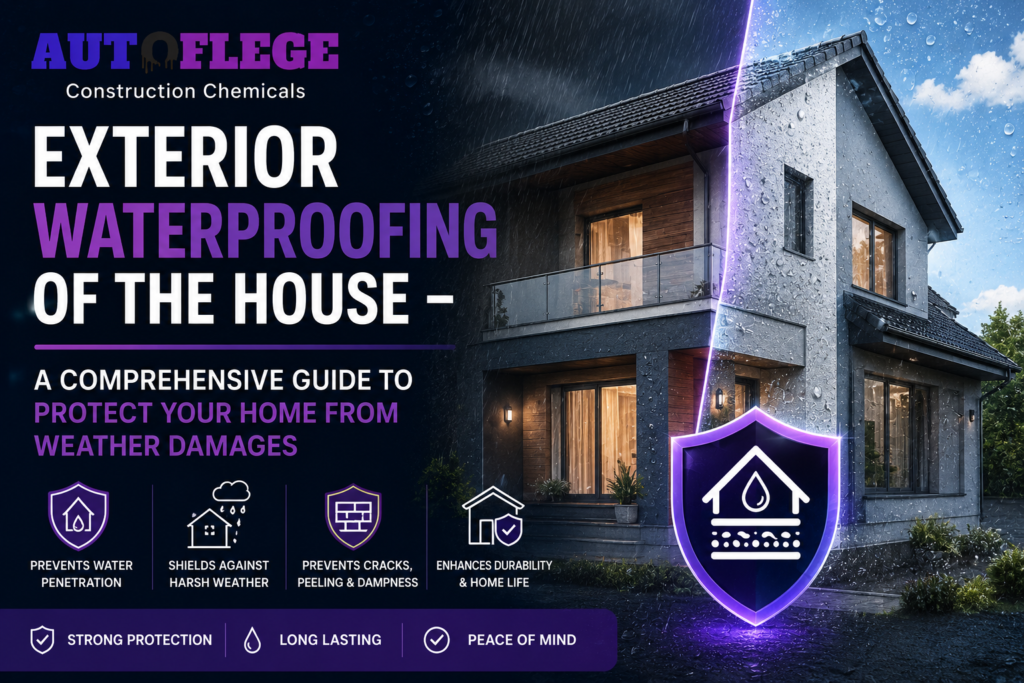
Exterior Waterproofing of the House – A Comprehensive Guide to Protect Your Home from Weather Damages
The outside of a house faces the elements all year round. The external surface area of a structure is constantly subjected to continuous pollution from heavy rains and extreme sunlight along with particle dirt, humidity, as well as temperature changes. These environmental variables gradually erode exterior walls, creating small splits and cracks that allow moisture to infiltrate through joints and porous materials.
A lot of the homeowners pay attention primarily in maintaining the interior while they forget about securing the exterior of their property. But the outside walls of a house serve as the first barrier against rain and environmental causes. The moment this moisture starts entering through the exterior walls, it gradually builds-up damp patches, peeling paint, mold growth, cracks and structural damage in the interior spaces of the home.
The exterior walls are more exposed because they will still be soaked with continuous rain and moisture during the monsoon seasons. Waterproofing protects structures from the slow and continuous degradation of concrete strength, steel reinforcement, plaster, and even interior finishes if this protection is weak or damaged.
Exterior waterproofing is a very crucial process if you want your structure to be long lasting and less hazardous in the years to come. Good waterproofing acts as a shield that stops the rainwater from passing through and increases durability and aesthetically pleasing to the building.
Modern waterproofing chemicals along with some new and improved protective coatings offer a low-maintenance, long lasting protection from the elements. With the right waterproofing solution, you will save hundreds or even thousands of future repair costs while ensuring that your home is as beautiful and strong as ever.
All you need to know about exterior house waterproofing — common causes of leakage, warning signs, waterproofing methods, application process & maintenance tips; what is Autoflege waterproofing solutions and how it protects the home wall from long-term moisture damages of a life time.
The Importance of Exterior House Waterproofing
Exterior walls are the barriers that shield the entire building from being exposed to environmental conditions outside. Without waterproofing, moisture seeps into the structure bit by bit.
- Prevents Rainwater Seepage: Waterproofing keeps rain water out of walls and causing damage to the interiors.
- Protects Structural Strength: The continuous presence of water gives the concrete, plaster, bricks and even the steel reinforcement.
- Prevents Dampness and Mold: When done correctly, it reduces the damp patches that lead to unhealthy indoor environments with mold growth.
- Maintains Exterior Appearance: This includes the peeling of paint, the appearance of cracks and discoloration as well as surface damage that is easily caused by exposure to water.
- Increases Building Lifespan: Moisture protection helps extend the long-term lifespan of the home.
- Reduces Repair Costs: Prevent costly structural and repaint repairs today by waterproofing early.
What Are the Common Causes for Leaking Exterior Walls?
Knowing what causes water seepage half the battle is in selecting the right waterproofing.
Cracks in Exterior Walls: Often, temperature changes make surface layers move in different directions, and this creates cracks that allow water to enter the structure.
Poor Construction Quality: The main culprit is low quality materials and improper plastering which causes excessive water absorption.
Damaged Exterior Paint: Over time, paint tends to decay; damaged or aged paint plants are unfit for rainwater protection.
Porous Wall Surfaces: Certain wall materials will naturally soak up moisture over time if they are not treated in some manner.
Water Stagnation: Wall moisture exposure is increased by improper drainage around the building.
Weak Waterproofing Layer: Waterproof systems typically fail as they age or become damaged.
Also Check: Complete Guide to Prevent Leakage and Moisture Damage: Kitchen Waterproofing Solutions
Here Are Sign that Your External Wall Should Be Waterproofed
Here are warning signs that homeowners should never ignore:
- Damp patches on interior walls
- Peeling or bubbling paint
- Mold growth
- White salt deposits on walls
- Cracks on external surfaces
- Moisture stains after rainfall
- Foul smell indoors
- Plaster damage
- Discoloration on exterior walls
Such signs suggest an intrusion of water through outside layers of the structure.
Exterior House Waterproofing Solutions — Types
Various methods of waterproofing are performed suited to the nature of the wall, location and type of building etc.
Acrylic Waterproof Coating
Acrylic waterproof coatings are one of the more widely used exterior wall protection.
Benefits include:
- Excellent weather resistance
- UV protection
- Flexible coating
- Crack resistance
- Long-lasting finish
Autoflage acrylic waterproofing systems have got you covered in harsh weather conditions and rainwater seepage.
Elastomeric Waterproof Coating
These coatings are also known as elastomeric turned wall membrane; they are exact plastic and greater elastic and thus useful for packing hairline cracks.
Advantages include:
- High elasticity
- Crack bridging ability
- Water resistance
- Durable performance
- Smooth finish
Cementitious Waterproofing
Waterproof cement-based systems are most commonly used to prepare concrete and masonry surfaces.
Features include:
- Strong bonding
- Easy application
- Durable protection
- Cost-effective solution
Silicone-Based Water Repellent Coatings
These types of coatings keep the water absorption in check while allowing the surface to breathe.
Benefits include:
- Water repellency
- Deep penetration
- Reduced moisture absorption
- Surface protection
Polyurethane Waterproof Coating
Advanced waterproofing performance under the most severe exposure one can develop with polyurethane systems.
Advantages include:
- High flexibility
- Excellent adhesion
- Long-term durability
- Strong moisture resistance
Step-by-Step Exterior House Waterproofing Process
Waterproofing performed incorrectly do not get the expected performance
Step 1: Surface Inspection
Examine the exterior walls thoroughly to check for cracks, damage, and leaks.
Step 2: Surface Cleaning
Thoroughly clean the surface by removing dust, dirt, algae, loose paint, grease and any contaminant.
Step 3: fix cracks.
Step 4: prepare the walls by keeping smooth and even to help promote bond.
Step 5: Primer Application: Apply proper primer for better adhesion.
Step 6: Waterproof Coating Application
Apply waterproof coating on all the exterior wall surfaces uniformly.
Step 7: Final Protective Finish
Cure time (for strength and protection to last)
Common Mistakes to Avoid
High-quality waterproofing systems can fail to perform properly because of application errors.
Ignoring Small Cracks
Little cracks soon turn into big leaks.
- Putting coating on damp drywall causes adhesion and diminished product performance.
- Poor Surface Cleaning
Waterproofing is affected by dust and loose particles.
- Using Low-Quality Products: Inexpensive types of waterproofing products tend to quickly give up in extreme weather exposures.
- Skipping Primer Application: This is where waterproofing primers come to play, making the bond between the wall and waterproof coating stronger.
- Improper Drainage Systems: Washing and drying walls leads to water collection near them increasing the risk of seepage.
Advantages of Correct Outside House Waterproofing
- Leak-Free Interiors: Prevents water from causing damage within rooms and ceilings.
- Better Structural Durability: Prevents moisture damage to concrete, plaster, and reinforcement.
- Improved Appearance: Your exterior walls will not only look better, but they also stay looking good for longer.
- Reduced Maintenance Costs: Prevents the need for repainting and costly repairs
- Better Indoor Environment: Minimizes moisture, Mold growth and stench.
- Increased Property Value: Houses that are well-kept tend to command more money and receive offers quickly.
Preventive Maintenance Tips
Proper maintenance keeps them working as efficiently waterproofs for years.
- Exterior Walls Should Be Inspected Before & After Monsoon
- Repair cracks immediately
- Repaint damaged surfaces when required
- Keep drainage systems clean
- Clean Algae and dirt Build-Up on time
- Reapply waterproof coatings periodically
- Inspecting drainage systems on roofs & terraces
Performing maintenance on time allows for a more sustainable control of the structure in the long run
Why Modern Waterproofing Solutions Matter?
Conventional waterproofing strategies tend to break down with prolonged environmental exposure. New waterproofing systems have been made to be better able to repel during rainstorms and protect against sun, humidity, pollution and temperature fluctuations.
Advanced waterproofing chemicals provide:
- Better flexibility
- Stronger adhesion
- Improved crack resistance
- Superior weather protection
- Longer durability
- Reliable moisture barriers
The use of high-performance waterproofing systems while constructing or resurfacing effectively minimizes long-term maintenance issues.
Exterior House Autoflege Waterproofing Solutions
Modern homes need a waterproofing system that responds well in various Indian climate conditions.
Autoflege provides trusted waterproofing services designed specifically for exterior walls, terraces, roofs and building facades. Their premium, advanced waterproofing materials provide protection to the house against damage from rainwater seepage, moisture, cracking, and long-term damage to the home structure.
Autoflege waterproofing systems provide:
- Strong adhesion
- Weather resistance
- Crack protection
- Long-lasting durability
- Reliable moisture barrier
- Advanced exterior protection
Quality waterproofing systems are trusted by builders, contractors and homeowners alike because it is always cheaper to stop potential water damage before it can inflict major structural damage later.
Exterior walls are highly exposed to rain, humidity, sunlight and the elements. Moisture slowly seeps into the structure, causing irreparable long-term damage to walls, ceilings, paint and concrete if they are not adequately waterproofed.
It also helps in protecting your belongings from the damage caused by leakage, dampness and mold growth as well as paint damage and weakening of structure which is necessary for maintaining our property. The use of premium waterproofing systems with the proper application practices helps ensure dependable long-term protection and lower lifetime maintenance costs.
Not only does it make your exterior look better, but it also fortifies your whole house for years to come.